
Security monitoring with context instead of alert overload.
Wazuh-based security monitoring for servers and endpoints – with a clear definition of which data is collected and how alerts are handled.
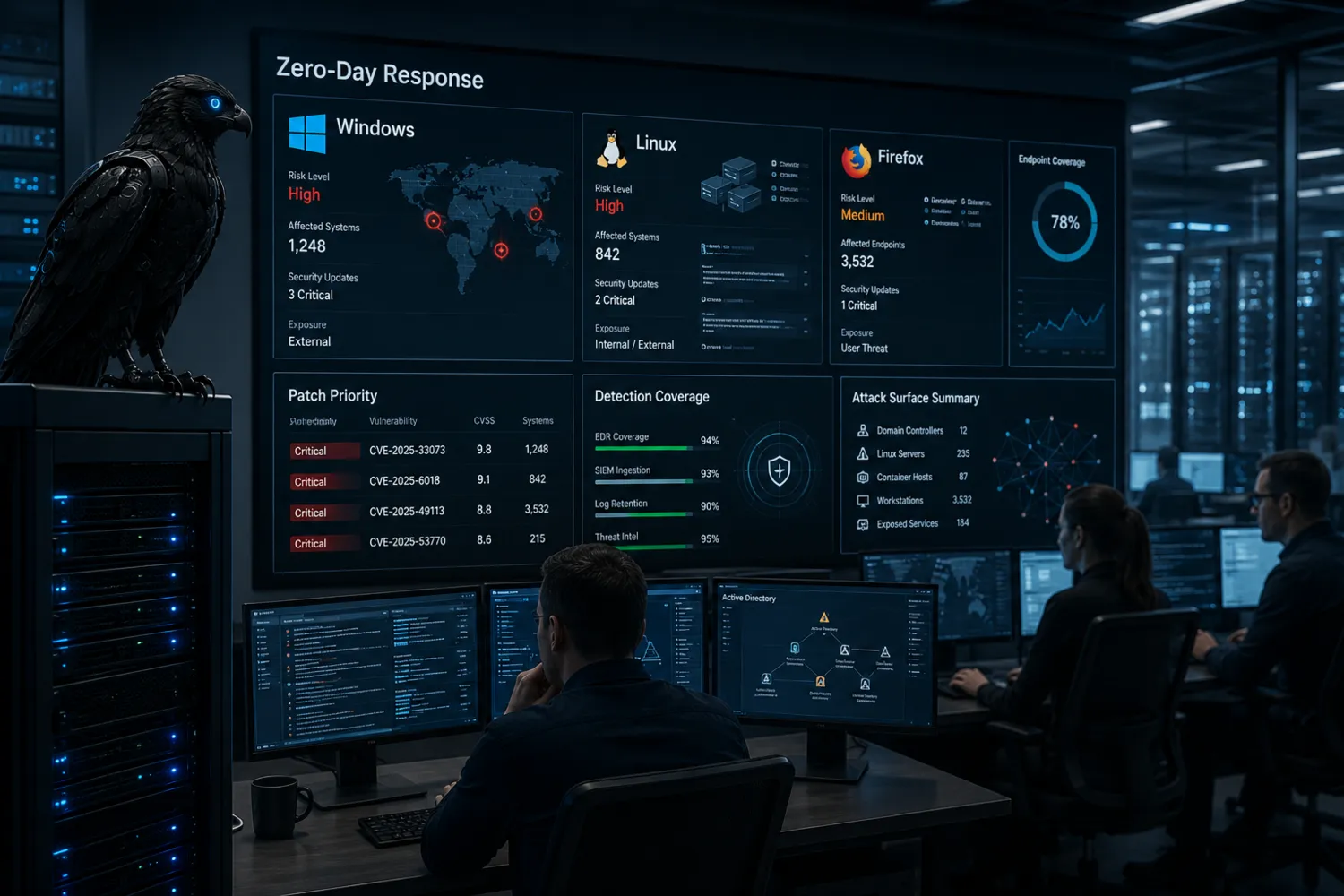
Illustrative representation. The exact scope is agreed before work begins.
More visibility – but only if events are actually reviewed.
Wazuh can make security-relevant events, indicators of known vulnerabilities, configuration deviations and changes to monitored files visible. What matters is the technical assessment and the agreed operating process behind them.
Security events
Make selected security-relevant events from endpoints and servers centrally visible.
Vulnerability context
Assess indicators of known vulnerabilities in technical context and prioritize affected systems appropriately.
File integrity
Track changes to defined critical files and areas.
Security configuration
Regularly review configuration states and selected security baselines.
Alert review
Filter and assess alerts in the context of the actual environment.
Data protection in scope
Log sources, retention and access rights must be clearly defined before production use.
Wazuh is a tool, not a ready-made SOC contract.
For small environments, a dedicated customer instance or a customer-hosted deployment may be appropriate. Architecture, retention, responsibilities and escalation paths are defined before production use.
Data collection is limited to the agreed security purpose. Browser history, content monitoring, or employee behavior and performance monitoring are not part of the service.